

How to prevent scaling in industrial cooling towers?
Oct 08, 2025
Scaling in industrial cooling towers is a common and costly problem that can significantly reduce the efficiency and lifespan of the equipment. As an industrial cooling tower supplier, I understand the importance of preventing scaling to ensure optimal performance and cost - effectiveness for our clients. In this blog, I will share some effective strategies to prevent scaling in industrial cooling towers.
Understanding Scaling in Industrial Cooling Towers
Before delving into prevention methods, it's essential to understand what scaling is and why it occurs in cooling towers. Scaling is the deposition of mineral salts on the surfaces of the cooling tower components, such as fill media, heat exchangers, and pipes. These salts, primarily calcium carbonate, calcium sulfate, and magnesium hydroxide, are present in the makeup water used in the cooling tower.
As water evaporates in the cooling tower, the concentration of these dissolved minerals increases. When the concentration exceeds the solubility limit, the minerals precipitate out of the water and form a hard, crusty layer on the surfaces. This scaling can impede water flow, reduce heat transfer efficiency, and increase energy consumption. Moreover, it can lead to corrosion, equipment damage, and costly maintenance and repairs.
Water Treatment
One of the most effective ways to prevent scaling in industrial cooling towers is through proper water treatment. This involves a combination of chemical treatment and physical filtration to remove or reduce the concentration of scaling - forming minerals in the makeup water.
Chemical Treatment
Chemical treatment is the most common method of preventing scaling in cooling towers. It involves adding chemicals to the water to inhibit the precipitation of minerals and keep them in solution. Some of the commonly used chemicals for scaling prevention include:
- Chelating Agents: These chemicals bind to the metal ions in the water, such as calcium and magnesium, and prevent them from forming insoluble salts. Examples of chelating agents include ethylenediaminetetraacetic acid (EDTA) and nitrilotriacetic acid (NTA).
- Dispersants: Dispersants are used to keep the suspended particles in the water from agglomerating and forming scale. They work by adsorbing onto the surface of the particles and preventing them from sticking together. Common dispersants include polymers and copolymers.
- Acid Treatment: Acid can be added to the cooling tower water to lower the pH and increase the solubility of calcium carbonate. However, acid treatment must be carefully controlled to prevent corrosion of the cooling tower components. Sulfuric acid and hydrochloric acid are commonly used for this purpose.
Physical Filtration
Physical filtration is another important aspect of water treatment. It involves passing the makeup water through filters to remove suspended solids, such as sand, silt, and organic matter. These solids can act as nuclei for scale formation, so removing them can significantly reduce the risk of scaling.
There are several types of filters that can be used in cooling tower water treatment, including:
- Sand Filters: Sand filters are the most common type of filter used in cooling towers. They work by passing the water through a bed of sand, which traps the suspended solids.
- Cartridge Filters: Cartridge filters are more efficient than sand filters and can remove smaller particles. They consist of a cartridge made of a porous material, such as polypropylene or cellulose, which traps the solids.
- Membrane Filters: Membrane filters, such as reverse osmosis (RO) and ultrafiltration (UF), are the most advanced type of filters. They can remove almost all the dissolved solids and microorganisms from the water, providing high - quality makeup water for the cooling tower.
Proper Cooling Tower Design and Operation
In addition to water treatment, proper cooling tower design and operation can also help prevent scaling.
Cooling Tower Design
The design of the cooling tower can have a significant impact on scaling. For example, the type of fill media used in the cooling tower can affect the water distribution and the contact time between the water and the air. A well - designed fill media can ensure uniform water distribution and maximize the evaporation efficiency, reducing the concentration of dissolved minerals in the water.
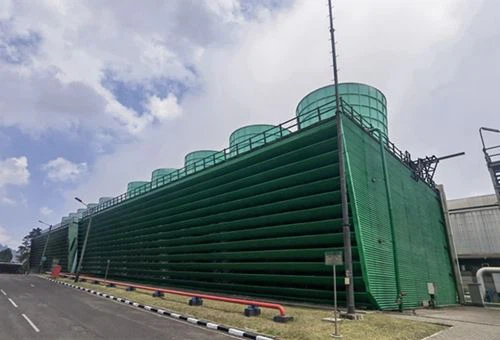
There are different types of cooling towers available, such as the Cross Flow Natural Draft Cooling Tower. This type of cooling tower has a unique design that allows for efficient heat transfer and can be designed to minimize scaling. Similarly, Seawater Cooling Tower and Concrete Crossflow Cooling Towers are designed with specific features to handle different water sources and operating conditions, which can help prevent scaling.
Operation and Maintenance
Proper operation and maintenance of the cooling tower are crucial for preventing scaling. This includes:
- Monitoring Water Quality: Regularly monitoring the water quality in the cooling tower is essential to ensure that the chemical treatment is working effectively and the water is within the acceptable range of pH, conductivity, and mineral concentration.
- Maintaining Proper Water Flow and Level: Maintaining the proper water flow and level in the cooling tower is important to ensure uniform water distribution and prevent dry spots, which can lead to scaling.
- Cleaning and Inspecting the Cooling Tower: Regularly cleaning and inspecting the cooling tower components, such as the fill media, heat exchangers, and pipes, can help remove any scale that has formed and prevent further scaling.
Biological Control
Biological growth in cooling towers can also contribute to scaling. Microorganisms, such as bacteria, algae, and fungi, can produce slime and biofilms on the surfaces of the cooling tower components. These biofilms can trap suspended solids and minerals, promoting scale formation.

To prevent biological growth in cooling towers, biocides can be added to the water. Biocides are chemicals that kill or inhibit the growth of microorganisms. There are two main types of biocides: oxidizing biocides, such as chlorine and bromine, and non - oxidizing biocides, such as quaternary ammonium compounds and isothiazolinones.
Training and Education
Finally, training and education of the cooling tower operators are essential for preventing scaling. Operators should be trained on the proper use of water treatment chemicals, the importance of water quality monitoring, and the correct operation and maintenance procedures for the cooling tower.
By providing operators with the knowledge and skills they need to prevent scaling, we can ensure that the cooling tower operates efficiently and effectively, reducing the risk of equipment damage and costly repairs.
Conclusion
Preventing scaling in industrial cooling towers is a complex but essential task. By implementing a comprehensive approach that includes water treatment, proper cooling tower design and operation, biological control, and training and education, we can significantly reduce the risk of scaling and ensure the optimal performance and longevity of the cooling tower.
If you are interested in learning more about our industrial cooling towers and how we can help you prevent scaling, please feel free to contact us for a consultation. Our team of experts is ready to assist you in finding the best solution for your specific needs.
References
- ASHRAE Handbook - HVAC Systems and Equipment. American Society of Heating, Refrigerating and Air - Conditioning Engineers.
- Cooling Tower Institute. Cooling Tower Fundamentals and Best Practices.
- Water Treatment Handbook. Ecolab.