

What are the applications of seawater cooling towers?
Jul 18, 2025
Seawater cooling towers have emerged as a crucial solution in various industries, offering efficient and sustainable cooling options. As a leading supplier of seawater cooling towers, I am excited to explore the diverse applications of these remarkable systems.
Power Generation
One of the primary applications of seawater cooling towers is in power generation plants. Power plants, whether they are fossil - fuel - based, nuclear, or concentrated solar power plants, require a significant amount of cooling to maintain the efficiency and safety of their operations. Seawater cooling towers can effectively dissipate the large amounts of heat generated during the power generation process.
In fossil - fuel power plants, steam turbines are used to generate electricity. After the steam has passed through the turbine, it needs to be condensed back into water. Seawater cooling towers can provide the necessary cooling water to condense the steam, allowing the cycle to continue. Nuclear power plants also rely on cooling systems to prevent overheating of the reactor core and associated equipment. Seawater, with its abundant supply near coastal areas, is an ideal coolant for these large - scale power generation facilities.
Concentrated solar power plants, which use mirrors or lenses to concentrate sunlight onto a receiver, also generate a substantial amount of heat. The heat is used to produce steam and drive a turbine for electricity generation. Similar to other power plants, seawater cooling towers can help in managing the heat and ensuring the smooth operation of the plant. For more information on industrial - scale cooling solutions, you can visit our Industrial Counterflow Cooling Tower page.
Desalination Plants
Desalination plants play a vital role in providing fresh water in regions with limited freshwater resources. These plants use various processes, such as reverse osmosis or multi - stage flash distillation, to remove salt and other impurities from seawater. During the desalination process, a significant amount of heat is generated. Seawater cooling towers can be used to cool the equipment and maintain the optimal operating temperature.
In reverse osmosis desalination plants, high - pressure pumps are used to force seawater through a semi - permeable membrane. The process generates heat due to the mechanical work done by the pumps. Seawater cooling towers can help in dissipating this heat, improving the efficiency of the reverse osmosis membranes and reducing the energy consumption of the plant.
Multi - stage flash distillation plants operate by heating seawater and then flashing it into steam in multiple stages. After the steam is condensed to produce fresh water, the remaining brine needs to be cooled before it is discharged back into the sea. Seawater cooling towers are an effective solution for this cooling requirement. You can learn more about our Concrete Crossflow Cooling Towers, which can be suitable for desalination plant applications.
Industrial Manufacturing
Many industrial manufacturing processes generate a large amount of heat that needs to be removed to ensure product quality and equipment longevity. Seawater cooling towers are widely used in industries such as chemical manufacturing, petrochemical, and metal processing.
In the chemical manufacturing industry, various chemical reactions take place at high temperatures. Cooling is required to control the reaction rates and prevent unwanted side reactions. Seawater cooling towers can provide a continuous supply of cool water to cool the reactors, heat exchangers, and other equipment.

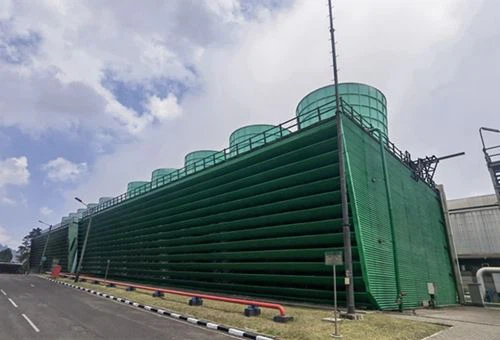
Petrochemical plants, which refine crude oil and produce a wide range of products such as gasoline, diesel, and plastics, also rely on cooling systems. The distillation columns, reactors, and condensers in these plants generate a significant amount of heat. Seawater cooling towers can efficiently remove this heat, ensuring the smooth operation of the plant and the quality of the petrochemical products.
Metal processing industries, including steel mills and aluminum smelters, involve high - temperature processes such as melting, casting, and rolling. Cooling is essential to prevent the metal from deforming and to maintain the mechanical properties of the final product. Seawater cooling towers can be used to cool the molten metal, the molds, and the processing equipment. Our Seawater Cooling Tower solutions are specifically designed to meet the demanding requirements of industrial manufacturing.
Marine and Offshore Applications
Seawater cooling towers also find applications in marine and offshore environments. Ships and offshore platforms require cooling systems for various purposes, including engine cooling, air conditioning, and refrigeration.
On ships, the main engines generate a large amount of heat during operation. Seawater cooling towers can be used to cool the engine coolant, ensuring the proper functioning of the engine and preventing overheating. Additionally, ships often have air - conditioning and refrigeration systems to maintain a comfortable environment for the crew and to store perishable goods. Seawater cooling can be used to improve the efficiency of these systems.
Offshore platforms, such as oil rigs and floating production storage and offloading (FPSO) vessels, also have complex cooling requirements. The drilling equipment, power generators, and processing facilities on these platforms generate heat that needs to be removed. Seawater cooling towers can provide a reliable and efficient cooling solution in these harsh offshore environments.
Advantages of Seawater Cooling Towers
Seawater cooling towers offer several advantages over other cooling methods. Firstly, seawater is an abundant and readily available resource, especially in coastal areas. This makes it a cost - effective option for industries located near the sea.
Secondly, seawater has a relatively high heat capacity, which means it can absorb a large amount of heat without a significant increase in temperature. This allows seawater cooling towers to be more efficient in dissipating heat compared to other cooling media.
In addition, seawater cooling towers can be designed to have a low environmental impact. By using advanced technologies such as drift eliminators and water treatment systems, the amount of water and salt emissions can be minimized. This helps in protecting the marine ecosystem and complying with environmental regulations.
Contact Us for Your Seawater Cooling Tower Needs
If you are looking for a reliable and efficient seawater cooling tower solution for your industry, we are here to help. Our team of experts has extensive experience in designing, manufacturing, and installing seawater cooling towers. We can provide customized solutions based on your specific requirements, ensuring optimal performance and cost - effectiveness.
Whether you are in the power generation, desalination, industrial manufacturing, or marine and offshore sectors, our seawater cooling towers can meet your cooling needs. Contact us today to start a discussion about your project and explore how our Seawater Cooling Tower solutions can benefit your business.
References
- "Cooling Technology Handbook" by John P. Holman.
- "Industrial Heat Transfer" by D. Q. Kern.
- Research papers on seawater cooling systems from leading engineering journals.