

What are the effects of water hardness on the performance of water treatment chemicals?
Jul 22, 2025
Water hardness refers to the concentration of divalent metal ions, mainly calcium and magnesium ions, in water. These ions can have a significant impact on the performance of water treatment chemicals. As a water treatment chemicals supplier, understanding these effects is crucial for providing effective solutions to our customers.
Impact on Scale Inhibitor and Dispersant
Hard water contains high levels of calcium and magnesium ions, which have a tendency to form insoluble salts such as calcium carbonate and magnesium hydroxide. These salts can precipitate out of the water and form scale on the surfaces of pipes, heat exchangers, and other equipment. Scale buildup can reduce the efficiency of heat transfer, increase energy consumption, and even cause equipment failure.
Scale Inhibitor and Dispersant are designed to prevent the formation of scale and disperse any existing scale particles. However, the performance of these chemicals can be affected by water hardness. In hard water, the high concentration of calcium and magnesium ions can react with the scale inhibitor molecules, reducing their effectiveness.
For example, some scale inhibitors work by chelating with the calcium and magnesium ions, preventing them from forming insoluble salts. In hard water, there may be an excess of these ions, which can saturate the chelating sites on the inhibitor molecules. As a result, the inhibitor may not be able to effectively bind to all the ions, leading to scale formation.
Moreover, the high ionic strength of hard water can also affect the solubility and stability of the scale inhibitor. In some cases, the inhibitor may precipitate out of the water, reducing its availability for preventing scale formation.
To overcome these challenges, we offer specialized scale inhibitors and dispersants that are formulated to be more effective in hard water conditions. These products are designed to have a higher affinity for calcium and magnesium ions, allowing them to remain active even in the presence of high ion concentrations. Additionally, they are formulated to be more stable in high-ionic-strength environments, ensuring their long-term effectiveness.
Impact on Algal Inhibitor
Algae growth is a common problem in water systems, especially in those exposed to sunlight. Algae can cause a variety of issues, including clogging of filters, reducing water clarity, and producing unpleasant odors and tastes. Algal Inhibitor are used to control algae growth by interfering with their metabolic processes or preventing their attachment to surfaces.
Water hardness can also affect the performance of algal inhibitors. Hard water contains minerals that can act as nutrients for algae, promoting their growth. For instance, calcium and magnesium ions can be used by algae for cell wall formation and enzyme activation. In addition, the high pH levels often associated with hard water can also be favorable for algae growth.
Some algal inhibitors work by disrupting the cell membranes of algae or inhibiting their photosynthesis. However, the presence of high levels of calcium and magnesium ions in hard water can interfere with these mechanisms. For example, the ions can form a protective layer around the algae cells, reducing the penetration of the inhibitor into the cells.
Furthermore, the chemical reactions between the algal inhibitor and the calcium and magnesium ions in hard water can lead to the formation of insoluble complexes. These complexes may not be effective in controlling algae growth and can also cause additional problems, such as fouling of equipment.
Our algal inhibitors are formulated to be effective in a wide range of water conditions, including hard water. They are designed to overcome the challenges posed by the high mineral content and pH levels in hard water. For example, some of our products contain surfactants that can enhance the penetration of the inhibitor into the algae cells, even in the presence of a protective layer of ions.
Impact on Seawater Molluscicide
In seawater systems, mollusks such as mussels and barnacles can attach themselves to pipes, valves, and other equipment, causing blockages and reducing the efficiency of the system. Seawater Molluscicide are used to control the growth and attachment of these mollusks.

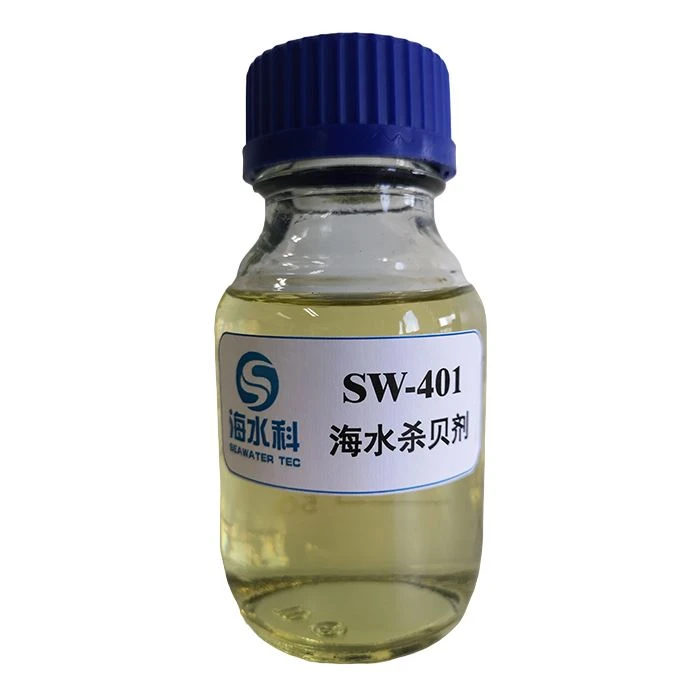
Seawater is naturally hard due to the high concentration of salts, including calcium and magnesium. The hardness of seawater can have a significant impact on the performance of seawater molluscicides. The high ionic strength of seawater can affect the solubility and stability of the molluscicide. Some molluscicides may precipitate out of the seawater due to the high salt concentration, reducing their effectiveness.
In addition, the calcium and magnesium ions in seawater can react with the molluscicide, altering its chemical structure and reducing its toxicity to mollusks. For example, the ions can form complexes with the active ingredients of the molluscicide, making them less available for killing the mollusks.
Our seawater molluscicides are specifically developed for use in seawater environments. They are formulated to be soluble and stable in high-ionic-strength seawater. We use advanced chemical formulations that can resist the reactions with calcium and magnesium ions, ensuring that the active ingredients remain effective in killing mollusks.
Conclusion
Water hardness can have a profound impact on the performance of water treatment chemicals. As a water treatment chemicals supplier, we are aware of these challenges and have developed a range of products that are specifically designed to be effective in hard water conditions. Our Scale Inhibitor and Dispersant, Algal Inhibitor, and Seawater Molluscicide are formulated to overcome the issues associated with high calcium and magnesium ion concentrations, high ionic strength, and other factors related to water hardness.
If you are facing problems with water treatment in hard water conditions or are interested in learning more about our products, we encourage you to contact us for a consultation. Our team of experts can provide you with customized solutions based on your specific water quality, system requirements, and budget. We are committed to helping you achieve optimal water treatment results and ensuring the efficient operation of your water systems.
References
- AWWA (American Water Works Association). Water Quality and Treatment: A Handbook of Community Water Supplies. McGraw-Hill, 2017.
- Crittenden, J. C., et al. Water Treatment: Principles and Design. John Wiley & Sons, 2012.
- Greenberg, A. E., et al. Standard Methods for the Examination of Water and Wastewater. American Public Health Association, 2017.