

What is the cleaning efficiency of a Circulating Water Cleaner?
Jan 20, 2026
As a supplier of Circulating Water Cleaners, I've been delving deep into the world of water treatment and the critical role our products play in industrial and commercial settings. In this blog, I aim to shed light on the cleaning efficiency of a Circulating Water Cleaner, exploring its mechanisms, benefits, and tangible impacts on water systems.
Understanding the Basics of Circulating Water Cleaner
Circulating water systems are ubiquitous in various industries, including power generation, manufacturing, and HVAC. These systems often suffer from problems such as corrosion, scaling, and biofilm growth. A Circulating Water Cleaner is specifically designed to address these issues and maintain the optimal performance of the water system.
The cleaning efficiency of a Circulating Water Cleaner can be measured by its ability to remove contaminants, prevent scale formation, and inhibit corrosion. When it comes to removing contaminants, the cleaner works by dispersing suspended solids and organic matter in the water. It contains surfactants and detergents that reduce the surface tension of the water, allowing the cleaner to penetrate and break down dirt and debris.
Mechanisms of Scale Prevention and Corrosion Inhibition
Scale formation is a major concern in circulating water systems. Minerals such as calcium and magnesium carbonate can precipitate out of the water and form hard deposits on heat transfer surfaces. These deposits reduce the efficiency of the system by insulating the heat transfer equipment, leading to increased energy consumption and potential equipment failure.
A high - efficiency Circulating Water Cleaner incorporates Scale Inhibitor and Dispersant to prevent scale formation. These inhibitors work by binding to the mineral ions in the water, preventing them from aggregating and forming crystals. They also disperse any existing scale particles, keeping them in suspension so they can be removed from the system through blowdown or filtration.
Corrosion is another critical issue in circulating water systems. Metal components such as pipes, heat exchangers, and pumps can be severely damaged by corrosion, which not only shortens the equipment's lifespan but also poses a risk to the safety and reliability of the system. Our Circulating Water Cleaner contains corrosion inhibitors that form a protective film on the metal surface. This film acts as a barrier, preventing oxygen and other corrosive agents from coming into contact with the metal.

Impact on System Performance
One of the most significant indicators of the cleaning efficiency of a Circulating Water Cleaner is its impact on the overall performance of the circulating water system. When the cleaner effectively removes contaminants, prevents scale formation, and inhibits corrosion, the system operates more efficiently.
In terms of energy efficiency, a clean water system with minimal scale and corrosion has better heat transfer capabilities. This means that less energy is required to heat or cool the water, resulting in significant cost savings. For example, in a power plant, a more efficient circulating water system can lead to lower fuel consumption and reduced greenhouse gas emissions.
The cleaner also helps to extend the lifespan of the equipment in the water system. By preventing corrosion and scale buildup, it reduces the wear and tear on pipes, valves, and heat exchangers. This not only saves on replacement costs but also minimizes downtime due to equipment failures.
Biofilm Control
Biofilm growth is another challenge in circulating water systems. Microorganisms such as bacteria, fungi, and algae can attach to the surfaces of the system and form a slimy layer. Biofilms can cause a variety of problems, including reduced heat transfer efficiency, increased corrosion rates, and the spread of water - borne diseases.
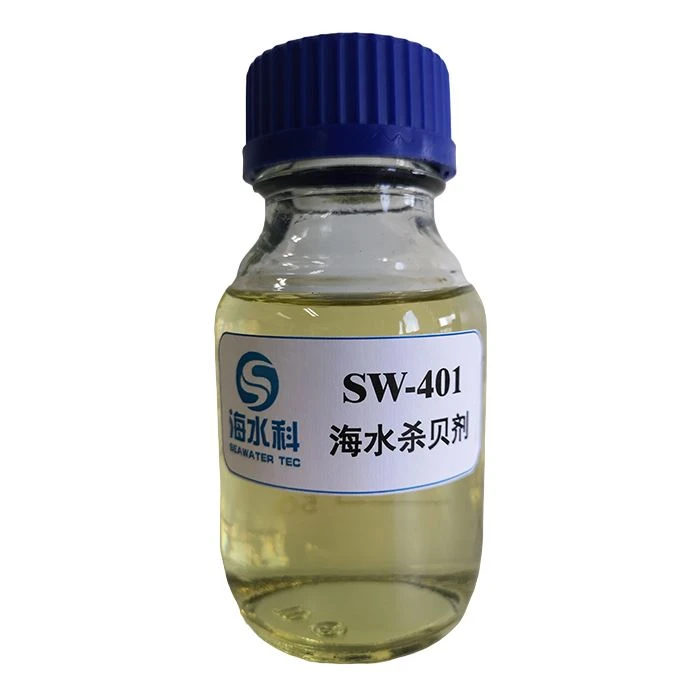
Our Circulating Water Cleaner includes biocides and other agents to control biofilm growth. These agents are designed to kill or inhibit the growth of microorganisms in the water. By keeping the biofilm under control, the cleaner helps to maintain the cleanliness and efficiency of the water system. In some cases, we also offer Seawater Molluscicide for systems that are exposed to seawater and face the problem of mollusk infestation.
Real - World Applications and Case Studies
To illustrate the cleaning efficiency of our Circulating Water Cleaner, let's look at some real - world applications. In a large manufacturing plant, the circulating water system was experiencing significant scale buildup on the heat exchangers. This led to a decrease in the cooling capacity of the system and increased energy consumption.
After implementing our Circulating Water Cleaner, the scale was gradually removed, and the heat transfer efficiency improved. The plant was able to reduce its energy consumption by 15% and extend the maintenance interval of the heat exchangers.
In a power generation facility, the water system was suffering from corrosion and biofilm growth. The use of our cleaner, along with Seawater Corrosion and Scale Inhibitors, effectively controlled these issues. The corrosion rate was reduced by 50%, and the biofilm was significantly minimized. This resulted in improved equipment reliability and reduced maintenance costs.
Factors Affecting Cleaning Efficiency
Several factors can affect the cleaning efficiency of a Circulating Water Cleaner. The quality of the raw water is one of the most important factors. Water with a high concentration of minerals, organic matter, or microorganisms will require a more powerful cleaner.
The operating conditions of the water system also play a role. Higher temperatures, pressures, and flow rates can affect the performance of the cleaner. For example, in a high - temperature system, the cleaner may need to be more heat - stable to maintain its effectiveness.
The dosage of the cleaner is another critical factor. Too little cleaner may not be able to effectively remove contaminants or prevent scale and corrosion, while too much cleaner can be wasteful and may even cause additional problems. Therefore, it is essential to determine the appropriate dosage based on the specific characteristics of the water system.
Conclusion and Call to Action
In conclusion, the cleaning efficiency of a Circulating Water Cleaner is a multi - faceted concept that encompasses the removal of contaminants, prevention of scale formation, inhibition of corrosion, and control of biofilm growth. Our Circulating Water Cleaner has proven to be highly effective in real - world applications, delivering significant benefits in terms of energy efficiency, equipment lifespan, and system reliability.
If you are looking for a reliable solution to improve the performance of your circulating water system, we invite you to contact us for a detailed consultation. Our team of experts can assess your specific needs and recommend the most suitable cleaning products and treatment programs. Let's work together to ensure the optimal operation of your water system and achieve long - term cost savings and environmental sustainability.
References
- [1] Water Treatment Handbook, John Wiley & Sons
- [2] Industrial Water Systems: Design, Operation, and Maintenance, CRC Press
- [3] Corrosion and Scale Control in Water Systems, NACE International