

What is the recommended air velocity for a cooling tower with a filler?
Dec 17, 2025
Hey there! As a supplier of cooling tower filler, I often get asked about the recommended air velocity for a cooling tower with a filler. It's a crucial topic because the right air velocity can significantly impact the performance and efficiency of a cooling tower.
First off, let's understand why air velocity matters in a cooling tower. The main job of a cooling tower is to remove heat from water by transferring it to the air. The filler inside the cooling tower plays a vital role in this process. It increases the contact area between the water and the air, allowing for more efficient heat transfer. But for this heat transfer to happen effectively, the air needs to flow through the filler at an appropriate speed.
If the air velocity is too low, the air won't be able to carry away the heat efficiently. The water might not get enough exposure to the air, and the cooling process will be slow and less effective. On the other hand, if the air velocity is too high, it can cause several problems. For example, it might carry water droplets out of the cooling tower, which is known as drift. This not only leads to water loss but can also cause environmental issues if the water contains chemicals. High air velocity can also cause uneven distribution of air and water in the filler, reducing the overall efficiency of the cooling tower.
So, what's the recommended air velocity? Well, it depends on several factors, including the type of filler, the design of the cooling tower, and the specific application. Generally, for most cooling towers with a typical filler, the recommended air velocity ranges from 1.5 to 3.5 meters per second (m/s). This range provides a good balance between efficient heat transfer and minimizing drift.
Let's take a closer look at how different types of fillers affect the recommended air velocity. There are various types of fillers available, such as PVC, PP, and others. Each type has its own characteristics and performance requirements.
PVC fillers are widely used in cooling towers because they are durable, corrosion-resistant, and have good heat transfer properties. For cooling towers with PVC filler, the recommended air velocity is usually around 2 to 3 m/s. This allows for efficient heat transfer while keeping the drift to a minimum.
PP fillers, such as the Trickling PP Fill, are also popular. They are lightweight and have a high surface area, which is great for heat transfer. The recommended air velocity for cooling towers with PP filler is similar to that of PVC filler, typically in the range of 1.8 to 3.2 m/s.

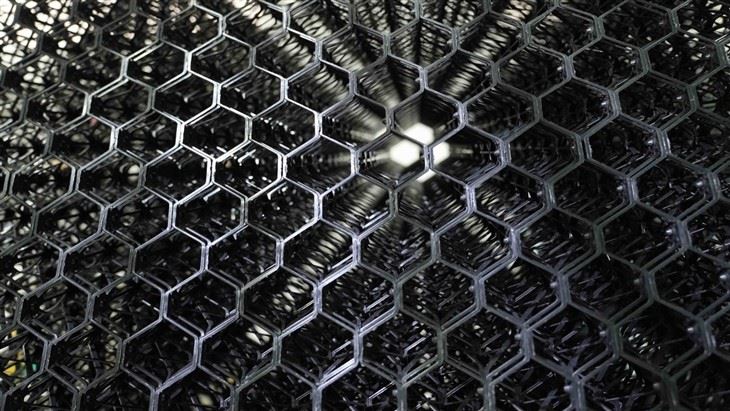
Another important factor to consider is the design of the cooling tower. The shape, size, and layout of the cooling tower can all affect the air flow and the optimal air velocity. For example, a larger cooling tower might require a slightly lower air velocity to ensure even distribution of air and water throughout the filler.
In addition to the type of filler and the design of the cooling tower, the specific application also plays a role in determining the recommended air velocity. For example, in industrial applications where the cooling load is high, a slightly higher air velocity might be required to achieve the desired cooling effect. However, in applications where water conservation is a priority, a lower air velocity might be preferred to minimize drift.
Now, let's talk about some of the other components of a cooling tower that are related to air velocity. The cooling tower fans, such as the Cooling Tower Fans, are responsible for creating the air flow through the cooling tower. Choosing the right fans is essential to achieve the recommended air velocity. The size, speed, and power of the fans need to be carefully selected based on the requirements of the cooling tower.
The drift eliminators, like the Cooling Tower Water Pvc Drift Eliminator, also play a crucial role in controlling the air flow and minimizing drift. They are designed to capture the water droplets carried by the air and return them to the cooling tower. The efficiency of the drift eliminators can be affected by the air velocity, so it's important to ensure that the air velocity is within the recommended range.
To determine the optimal air velocity for a specific cooling tower, it's often necessary to conduct some testing and analysis. This might involve measuring the air flow, temperature, and humidity at different points in the cooling tower. By collecting and analyzing this data, it's possible to fine-tune the air velocity and other operating parameters to achieve the best performance.
In conclusion, the recommended air velocity for a cooling tower with a filler depends on several factors, including the type of filler, the design of the cooling tower, and the specific application. Generally, a range of 1.5 to 3.5 m/s is a good starting point, but it's important to customize the air velocity based on the actual conditions. As a cooling tower filler supplier, we are here to help you choose the right filler and provide advice on the optimal air velocity for your cooling tower. If you're interested in purchasing cooling tower filler or have any questions about air velocity or other cooling tower-related issues, feel free to reach out and engage in procurement discussions. We're eager to work with you to ensure the efficient and effective operation of your cooling tower.
References
- "Cooling Tower Handbook", various authors, published by a leading industry publisher
- Technical papers and research studies on cooling tower performance and air flow management.