

How well does Splashing PP Fill conduct heat?
Jan 02, 2026
Hey there! As a supplier of Splashing PP Fill, I often get asked about how well it conducts heat. It's a crucial question, especially for industries that rely on efficient cooling systems. So, let's dive right into it and explore the heat - conducting capabilities of Splashing PP Fill.
Understanding Heat Conduction Basics
Before we talk about Splashing PP Fill specifically, let's go over what heat conduction is. Heat conduction is the transfer of heat energy through a material due to a temperature gradient. In simple terms, when one part of a material is hotter than another, heat will flow from the hot part to the cold part.
The rate of heat conduction depends on several factors. One of the main ones is the material's thermal conductivity. It's a property that shows how well a material can transfer heat. Higher thermal conductivity means the material can transfer heat more quickly. For instance, metals like copper and aluminum have high thermal conductivity, which is why they're used in many heat - transfer applications, like heat sinks in electronics.
Splashing PP Fill: What Is It?
Splashing PP Fill is a type of fill media used in cooling towers. Cooling towers are essential in many industrial processes, such as power generation, chemical manufacturing, and HVAC systems. Their main job is to remove heat from the water used in these processes and release it into the atmosphere.
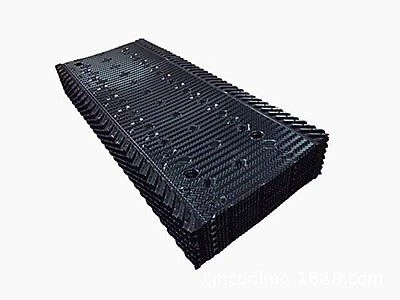
The fill media, like our Splashing PP Fill, plays a key role in this process. It provides a large surface area for the water to spread out and come into contact with the air. This contact between the water and the air allows for heat transfer through both conduction and evaporation.
Heat Conduction in Splashing PP Fill
You might be wondering, how well does Splashing PP Fill conduct heat? Well, PP (polypropylene) itself is not a super - high thermal conductor. Compared to metals, its thermal conductivity is quite low. But in a cooling tower context, that's not necessarily a bad thing.
The main goal of the fill media is to promote heat transfer between the water and the air. When water flows through the Splashing PP Fill, it spreads out over the large surface area provided by the fill. The air flowing through the cooling tower then takes away the heat from the water. Here, the low thermal conductivity of PP doesn't impede the overall heat - transfer process.
In fact, the design of the Splashing PP Fill is more important for heat transfer than the material's thermal conductivity. The complex structure of the fill creates multiple paths for the water to flow and break up into smaller droplets. Smaller droplets have a larger surface - area - to - volume ratio, which enhances evaporation. And evaporation is a major way of removing heat from the water.
Factors Affecting Heat Transfer in Splashing PP Fill
There are several factors that can affect how well the Splashing PP Fill helps with heat transfer.
Water Flow Rate
The rate at which water flows through the fill is crucial. If the water flow is too slow, it might not spread out evenly over the fill, reducing the surface area available for heat transfer. On the other hand, if the flow rate is too high, the water might pass through the fill too quickly, not allowing enough time for heat to be transferred to the air.
Airflow
Proper airflow is also essential. The air needs to flow through the cooling tower at an appropriate speed. A good airflow helps to carry away the heat absorbed from the water. If the airflow is restricted, the heat won't be removed efficiently.
Fill Design
As I mentioned earlier, the design of the Splashing PP Fill matters a lot. The shape, size, and arrangement of the fill elements determine how well the water spreads and how much surface area is available for heat transfer. A well - designed fill will have a high packing density while still allowing for good water and air movement.
Advantages of Using Splashing PP Fill
Even though its thermal conductivity is not extremely high, Splashing PP Fill has several advantages that make it a great choice for cooling towers.
Lightweight
PP is a lightweight material. This makes the installation and maintenance of the fill much easier compared to some other heavier materials. It also reduces the overall weight load on the cooling tower structure.
Chemical Resistance
Polypropylene has good chemical resistance. It can withstand exposure to various chemicals that might be present in the cooling water. This means the fill won't deteriorate easily, increasing its lifespan.
Cost - Effective
Compared to some high - performance materials, Splashing PP Fill is relatively inexpensive. This makes it an attractive option for businesses looking to keep their cooling - system costs down without sacrificing too much in terms of performance.
Other Related Cooling Tower Parts
When it comes to cooling towers, Splashing PP Fill is just one part of the equation. There are other important components that work together to ensure efficient heat transfer.
You can check out Cooling Tower Fill Media for more options and information on different types of fill media. And don't forget about the Cooling Tower Sprinkler Head Parts, which are responsible for distributing the water evenly over the fill. Also, the Cooling Tower Water Pvc Drift Eliminator helps to prevent water droplets from being carried out of the cooling tower by the airflow.
Conclusion and Call to Action
In conclusion, while Splashing PP Fill may not have the highest thermal conductivity in the world, its design and other properties make it a great option for cooling tower applications. It promotes efficient heat transfer through evaporation and provides a cost - effective and reliable solution for many industries.

If you're in the market for cooling tower parts and are interested in learning more about our Splashing PP Fill or any of our other products, don't hesitate to reach out. We're here to help you make the best choice for your cooling system needs. Whether you have questions about installation, performance, or pricing, we've got the answers. Contact us today to start a discussion about your requirements and how we can assist you in getting the right cooling tower solutions.
References
- Incropera, F. P., & DeWitt, D. P. (2002). Fundamentals of Heat and Mass Transfer. Wiley.
- Kreith, F., & Bohn, M. S. (2001). Principles of Heat Transfer. Brooks/Cole.