

What are the shear strength properties of Splashing PP Fill?
Jan 07, 2026
As a supplier of Splashing PP Fill, I am often asked about the shear strength properties of this product. Shear strength is a crucial factor in determining the performance and durability of fill materials in various applications, especially in cooling towers. In this blog post, I will delve into the shear strength properties of Splashing PP Fill, exploring what it is, why it matters, and how it compares to other fill materials.
Understanding Shear Strength
Shear strength refers to the ability of a material to resist forces that cause one part of the material to slide or deform relative to another part. In the context of Splashing PP Fill, shear strength is important because the fill is subjected to various forces during operation, including the impact of water droplets, the flow of air, and the mechanical stress from the structure of the cooling tower. If the shear strength of the fill is too low, it may break or deform under these forces, leading to reduced performance and potentially costly repairs.
Factors Affecting the Shear Strength of Splashing PP Fill
Several factors can affect the shear strength of Splashing PP Fill. One of the most important factors is the material composition. Polypropylene (PP) is a thermoplastic polymer known for its excellent chemical resistance, low density, and good mechanical properties. However, the specific formulation of the PP used in the fill can vary, and different formulations may have different shear strength characteristics. For example, the addition of fillers or reinforcements can increase the shear strength of the PP, while the presence of impurities or defects can decrease it.
Another factor that can affect the shear strength of Splashing PP Fill is the manufacturing process. The way the fill is molded or extruded can influence its internal structure and, consequently, its shear strength. For instance, a well - controlled manufacturing process can ensure a uniform distribution of the polymer chains in the PP, which can enhance the shear strength. On the other hand, a poorly executed manufacturing process may result in voids, cracks, or other defects that can weaken the fill.
The design of the Splashing PP Fill also plays a role in its shear strength. The shape, size, and thickness of the fill elements can affect how the fill distributes and resists shear forces. For example, a fill with a more complex and robust design may be better able to withstand shear forces than a simpler design.
Importance of Shear Strength in Cooling Tower Applications
In cooling tower applications, the shear strength of Splashing PP Fill is of utmost importance. Cooling towers rely on the fill to increase the contact area between the hot water and the air, facilitating the heat transfer process. If the fill has low shear strength, it may break or deform under the impact of the water droplets and the flow of air. This can lead to a reduction in the effective surface area of the fill, which in turn can decrease the heat transfer efficiency of the cooling tower.
Moreover, broken or deformed fill can cause blockages in the cooling tower, disrupting the flow of water and air. This can result in uneven cooling, increased energy consumption, and potential damage to other components of the cooling tower. Therefore, a high shear strength is essential to ensure the long - term performance and reliability of the cooling tower.
Comparison with Other Fill Materials
When comparing the shear strength of Splashing PP Fill with other fill materials, such as Vertical - Fluted Anti - Fouling Film Fill and Cross - Fluted Film Fill, several points should be considered.
Film fills, like Vertical - Fluted Anti - Fouling Film Fill and Cross - Fluted Film Fill, are typically made of thin sheets of plastic that create a large surface area for heat transfer. While these film fills can offer high heat transfer efficiency, their shear strength may be relatively lower compared to Splashing PP Fill. Film fills are more prone to damage from the impact of water droplets and mechanical stress, especially if they are not properly supported.
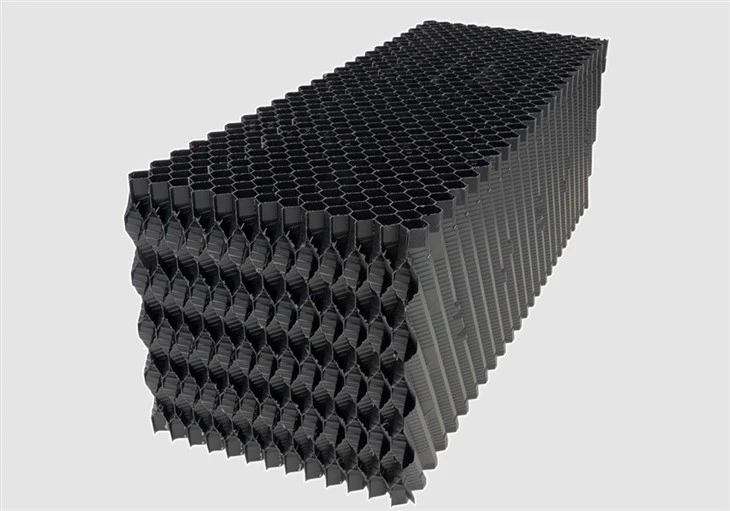

On the other hand, Splashing PP Fill is designed to withstand the forces associated with the splashing of water. Its three - dimensional structure and relatively thicker components give it better shear strength characteristics. This makes it a more durable option in applications where the fill is exposed to high - energy water flow and mechanical stress.
Testing the Shear Strength of Splashing PP Fill
To ensure the quality and performance of Splashing PP Fill, it is important to conduct shear strength testing. There are several standard testing methods available, such as the ASTM D732 test, which measures the shear strength of plastics by applying a shear force to a specimen until it fails.
During the testing process, specimens of the Splashing PP Fill are prepared according to the relevant standards. The specimens are then placed in a testing machine, and a shear force is gradually applied until the specimen breaks or deforms. The maximum shear force that the specimen can withstand is recorded, and this value is used to determine the shear strength of the fill.
Regular shear strength testing can help identify any issues with the fill, such as a decrease in shear strength over time due to aging or environmental factors. It also allows for quality control during the manufacturing process, ensuring that each batch of Splashing PP Fill meets the required shear strength specifications.
Maintenance and Shear Strength
Proper maintenance can also help preserve the shear strength of Splashing PP Fill. In a cooling tower environment, the fill may be exposed to various contaminants, such as dirt, debris, and chemical deposits. These contaminants can accumulate on the fill surface and potentially weaken its structure over time.
Regular cleaning of the cooling tower and the fill is essential to remove these contaminants. Additionally, it is important to monitor the water quality in the cooling tower, as high levels of chemicals or impurities in the water can also affect the shear strength of the fill. By maintaining a clean and healthy environment for the fill, its shear strength can be maintained, and its lifespan can be extended.
Conclusion
In conclusion, the shear strength properties of Splashing PP Fill are a critical aspect of its performance in cooling tower applications. The material composition, manufacturing process, and design of the fill all influence its shear strength. A high shear strength is essential to ensure the durability and efficiency of the cooling tower, as it allows the fill to withstand the forces associated with water flow and air movement.
Compared to other fill materials, Splashing PP Fill offers better shear strength characteristics, making it a more reliable option in high - stress applications. Regular shear strength testing and proper maintenance are important to ensure the long - term performance of the fill.
If you are in the market for high - quality Splashing PP Fill, I invite you to contact us for more information. We are committed to providing our customers with the best products and services, and we would be glad to discuss your specific requirements and how our Splashing PP Fill can meet them. Whether you need a small quantity for a pilot project or a large - scale supply for a commercial cooling tower, we have the expertise and resources to assist you. Let's start a conversation about your cooling tower needs and how our Splashing PP Fill can enhance the performance and reliability of your system.
References
- ASTM International. "Standard Test Method for Shear Strength of Plastics by Punching." ASTM D732 - 10 (2016).
- Cooling Tower Institute. "Cooling Tower Fill Design and Performance." Technical Manual.
- Various industry research papers on the mechanical properties of polypropylene and cooling tower fill materials.