How Does A Cooling Tower Work?
Dec 02, 2025
How does a cooling tower work?
Cooling towers are important equipment in cooling water systems. Inside the tower, air exchanges heat with cooling water to lower its temperature, allowing it to be recycled.

Counter-flow cooling tower:
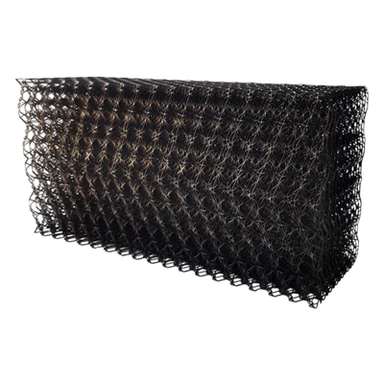
Under the action of the fan, air enters from the bottom of the tower and exits from the top. Air and water move vertically in opposite directions inside the cooling tower, resulting in high heat exchange efficiency. When the water treatment capacity exceeds 100 tons per hour (for a single unit), counter-flow cooling towers are recommended.

Cross-flow cooling tower:
Air passes laterally through the packing layer from the horizontal direction and is then discharged from the top of the cooling tower. Water flows from top to bottom through the packing layer. The flow directions of air and water are perpendicular, and the heat exchange efficiency is not as good as that of counter-flow type. The airflow resistance of the cross-flow tower is relatively small, the maintenance of the water distribution equipment is convenient, and the cooling water resistance is no more than 0.05MPa. Set up multiple sets of fans according to the volume of water. The height of the tower body is low, and the water distribution is relatively uniform. Relatively speaking, the noise is lower. When the water treatment capacity is below 100 tons per hour (for a single unit), it is more appropriate to use cross-flow cooling towers.