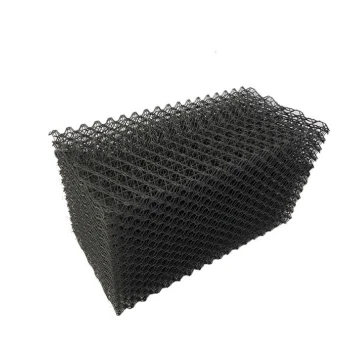
Evaporative Condenser Water Use In 2026: How To Cut Make-Up Water And Treat Plant Wastewater On Site
Oct 10, 2026
TL;DRAn evaporative condenser loses water three ways: evaporation, drift and blowdown. Evaporation alone is roughly 1.5 US gallons (about 5.8 L) per hour for each refrigeration ton. To reduce evaporative condenser water consumption, measure make-up water, tune blowdown, specify high-efficiency drift eliminators and match coil material to water quality. Then treat the plant's organic wastewater on site with trickling filter media and PP tube settlers. Note that trickling filters remove BOD, not dissolved salts.
Water access is now an operating risk for many industrial sites, and 2026 industry commentary keeps repeating the same order of work: measure first, reduce second, reuse third. Evaporative condensers remain the efficient choice for ammonia and halocarbon refrigeration, but they also make the water bill impossible to ignore.
This guide shows where an evaporative condenser actually loses water, which four steps cut it, and how the water treatment filter products that sit beside the condenser, trickling filter media and tube settlers, handle the wastewater side of the plant.
Where Does the Water Go in an Evaporative Condenser?
 |
Every evaporative condenser rejects heat by spraying water over a coil while air moves across it. The water you lose falls into three buckets:
|
Evaporation cannot be engineered away, because it is how the unit works. Drift and blowdown are where design and operation make the difference.
|
99.999% Circulating-water usage rate that LATINO specifies for its high-efficiency eliminators |
SS304 / 316L Elliptical stainless coil options, plus copper round tubes, for corrosion resistance |
2 types Forced draft and induced draft evaporative condensers |
How to Reduce Evaporative Condenser Make-Up Water: 5 Steps
|
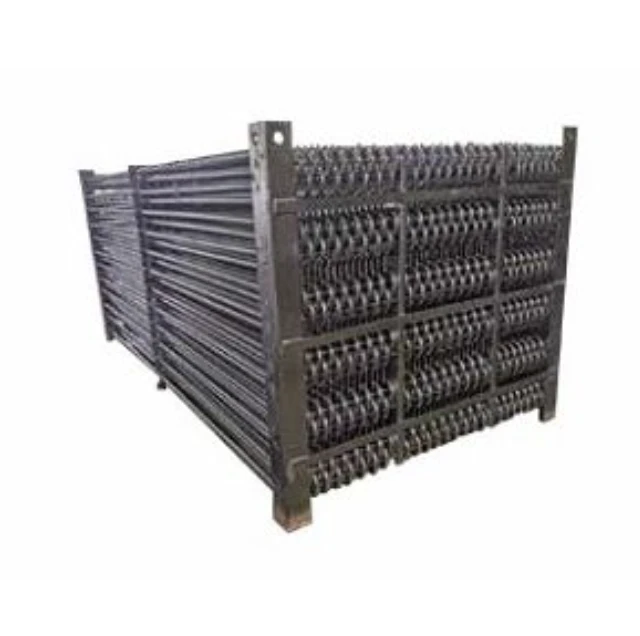 |
Key limit to remember: trickling filter media does not remove dissolved salts. Blowdown desalination needs a different technology. The products below treat the organic and solids load of the plant's process wastewater.
Trickling Filter Media vs Tube Settlers: Which Treats What?
Plants that run evaporative condensers, such as food and beverage, chemical and pharmaceutical sites, often discharge organic process wastewater too. LATINO's water treatment filter range covers two roles in that flow.
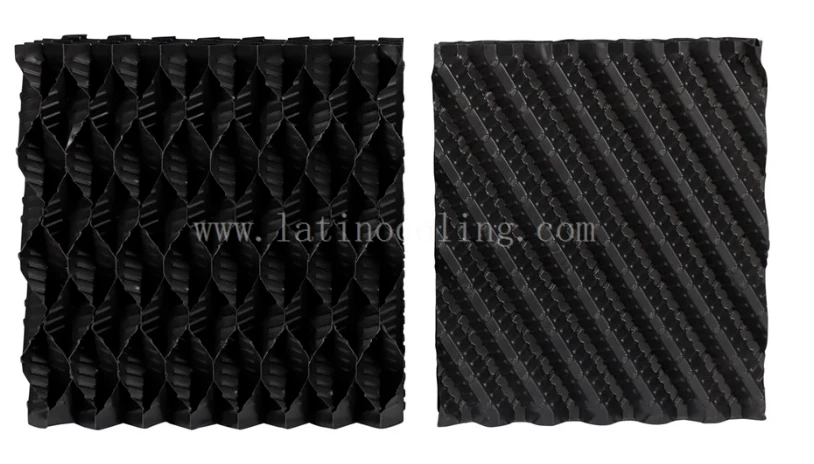 |
Trickling filter media: biology on a surfaceWastewater trickles over fixed media where a biofilm removes organic matter aerobically. Plastic media offers 90 to 150 m²/m³ of specific surface, against 45 to 60 m²/m³ for rock. Filters are usually 1 to 2.5 m deep, and up to 12 m with lighter plastic fill. See the biological treatment trickling filter. |
PP tube settlers: more settling area, no new basinTube settlers, also called lamella clarifiers, sit at a 60-degree angle and multiply sedimentation area up to 15 times per square meter of surface. They also capture biological floc that escapes a clarifier. See PP tube settlers or the plastic tube settler for biological treatment. |
 |
| Factor | Trickling filter media | PP tube settlers |
|---|---|---|
| Role | Aerobic biological treatment of organic matter (BOD) | Gravity separation of settleable solids and biological floc |
| Key figure | 90-150 m²/m³ (plastic media) | Up to 15x sedimentation area, 60° inclination |
| Needs upstream | Primary treatment, to prevent clogging | A clarifier or settling tank to retrofit |
| Does not do | Remove dissolved salts | Treat dissolved organics |
Specific surface area: plastic vs rock (upper end of typical range, m²/m³)
| Crushed rock (45-60) |
|
|
| Plastic media (90-150) |
|
Choosing media by treatment goal
| Goal | Wastewater strength | Effluent result | Media |
|---|---|---|---|
| BOD roughing | High | 40-80% BOD conversion | Vertical flow or mixed |
| BOD removal | Medium | 15-30 mg/L | Cross flow, large flutes |
| BOD and nitrification | Low | BOD < 10 mg/L, NH3-N < 3 mg/L | Cross flow, medium flutes |
| Nitrification | Extra low | 0.5-3 mg/L NH3-N | Cross flow, small or medium flutes |
Why Source Condensers and Water Treatment Media From One Manufacturer
Tianjin LATINO Environmental Technology designs, manufactures and services cooling equipment and components from its base in the Sino-Singapore Tianjin Eco-city. Buying condenser parts and water treatment media from one factory keeps specifications and delivery in one conversation.
|
90,000+ m² Covered area |
6+ Production lines |
80+ Exported countries |
ODM / OEM Mold library, custom sizes |
FAQ: Evaporative Condenser Water Use and Wastewater Treatment
How much water does an evaporative condenser evaporate per refrigeration ton?
About 1.53 US gallons (roughly 5.8 L) per hour for each ton of refrigeration. Drift and blowdown come on top of that, so meter total make-up water for a true figure.
Can a trickling filter treat evaporative condenser blowdown?
No. A trickling filter uses a biofilm to remove organic matter, so it suits process wastewater with BOD. It does not remove the dissolved salts that concentrate in blowdown.
How deep should a trickling filter be, and which media is better?
Depth is usually 1 to 2.5 m, and up to 12 m with lighter plastic filling. Plastic media gives 90 to 150 m²/m³ of specific surface versus 45 to 60 m²/m³ for rock, with larger pores that resist clogging.
What does a PP tube settler add to an existing clarifier?
Inclined 60-degree tubes multiply settling area up to 15 times per square meter of surface. That lets many plants raise capacity without building a new basin.
What should I send to get a quotation for custom media or condenser parts?
Send flow rate, wastewater strength (BOD or NH3-N targets), tank dimensions and local water quality. LATINO supports ODM and OEM customization with its own mold library.
Start With Measurement, Then Choose the Right Media
Cutting evaporative condenser water consumption starts with metering and blowdown control. Treating the plant's organic wastewater on site, with the right trickling filter media and tube settlers, lowers discharge load and prepares water for permitted reuse. For related reading, see our industrial evaporative condenser guide and the evaporative condenser selection guide.
Need a water-saving or wastewater treatment proposal?
Share your load, water quality and discharge targets, and our engineers will recommend the matching condenser parts and filter media.
Request a Quote → Browse Water Treatment Filters