


Industrial Evaporative Condenser Guide: Forced Draft Vs Induced Draft, Efficiency And Buying Checklist
Aug 20, 2026
[TL;DR] Industrial evaporative condensers use SS304 or 316L stainless steel elliptical coils and high-efficiency drift eliminators (up to 99.999% water reuse) in either forced-draft or induced-draft configurations. Compared with air-cooled condensers, they generally need less fan power for the same heat rejection, at roughly 1.5 gallons of water evaporated per ton of refrigeration per hour. LATINO builds standard and custom units backed by 20+ years of manufacturing experience.
For plant engineers and procurement teams across North America sourcing heat-rejection equipment overseas, the evaporative condenser purchase usually comes down to three questions: which draft configuration fits the layout, how much water and energy will it actually use, and can the supplier back up the spec sheet with a real factory and service history. Food and beverage, chemical, power generation, and petrochemical facilities all depend on stable condensing temperatures, and a poorly sized or poorly built unit shows up fast as higher energy bills, water waste, or unplanned downtime.
This guide breaks down how evaporative condensers work, how forced draft compares with induced draft, how they stack up against air-cooled and water-cooled alternatives, and what to check before placing an order.
Forced Draft vs Induced Draft: Core Components and Configurations
An evaporative condenser rejects heat by combining air flow with water evaporating over the refrigerant coil, rather than relying on air alone. That combination is what lets it use less fan power than a comparable air-cooled unit for the same cooling load.
|
Forced Draft Fan pulls air through the base; available as axial fan (low horsepower, wide capacity range, easy maintenance access) or centrifugal fan (quieter, suited to indoor installations). |
Induced Draft Fan mounted at the top pulls air up through the unit. Smaller floor footprint, fewer components than forced-draft models, and generally lower maintenance cost. |
|
|
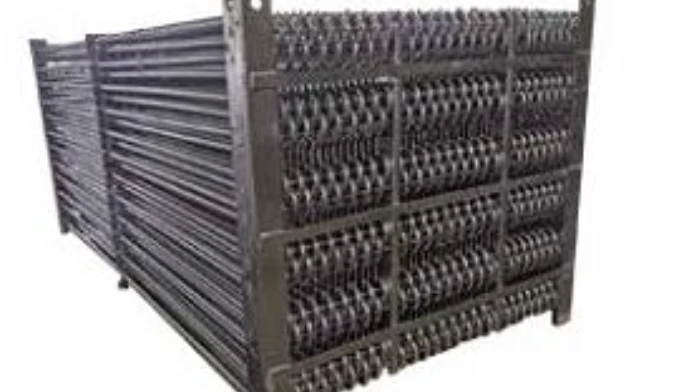
High-Efficiency Elliptical CoilSS304 and 316L stainless steel elliptical coils, plus copper round-tube options, give buyers a choice on corrosion resistance based on local water chemistry and outdoor conditions. |
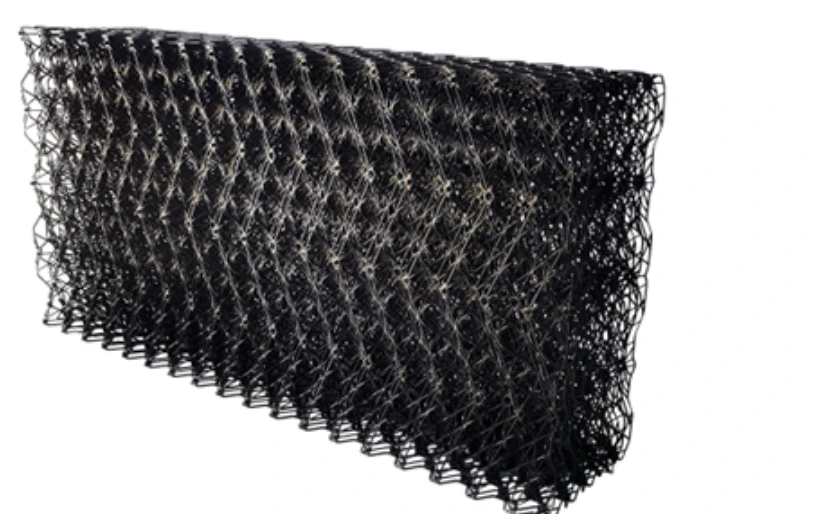
Drift EliminatorThe eliminator stage is standard on LATINO's evaporative units and is rated for up to 99.999% water circulation reuse, which directly reduces make-up water demand over the life of the equipment. |
|
Typical industries running evaporative condensers include:
- ✦ Food & beverage - precise temperature control to protect product freshness and safety
- ✦ Chemical & pharmaceutical - heat management for reactions, distillation, and storage
- ✦ Power generation - condensing steam turbine exhaust back into water
- ✦ Petrochemical - heat removal during high-temperature refining processes
- ✦ General manufacturing - removing process heat to keep operations stable
Evaporative Condenser vs Air-Cooled vs Water-Cooled Condenser
Buyers comparing condenser types are usually weighing fan power, water use, and installation footprint against each other. Here's how the three main options differ:
| Feature | Evaporative Condenser | Air-Cooled Condenser | Water-Cooled Condenser |
|---|---|---|---|
| Heat rejection method | Air + water evaporation over the coil | Air only | Circulating water only |
| Fan power needed | Lower for equivalent load | Higher air volume, higher fan power | Not air-driven |
| Water consumption | ~1.5 gal/ton-hr, water-dependent | None | Continuous circulation required |
| Best fit | Refrigeration, HVAC, process cooling where water is available | Water-restricted sites | Sites already running a water loop |
How LATINO Sizes and Delivers a Custom Unit
- Plant evaluation. Site data and current cooling setup are reviewed with your technical team or engineering firm.
- Cooling advisory. LATINO's team asks about load, ambient wet-bulb temperature, and water source before recommending a draft type.
- Tailor-made design. Coil material (SS304, 316L, or copper), fan type, and eliminator spec are confirmed for the application.
- Shipment planning. Units sized for 20GP/40HC containers ship standard; larger towers ship via flat-rack with reinforced fixing for the cooling tower components.
Why Buyers Work With LATINO
Tianjin LATINO Environmental Technology Co., Ltd. has more than 20 years of production experience and ships to 64 countries and regions, including the UK, Germany, France, Israel, Turkey, the UAE, Malaysia, Australia, and other markets across Europe, the Middle East, and Asia-Pacific. Beyond standard evaporative condensers, the factory OEMs cooling tower parts for other brands, designs whole-set cooling towers in-house, and handles both cooling tower updates and full repair/rebuild work - so a single supplier can cover new equipment, replacement parts, and service over the equipment's working life.
Frequently Asked Questions
Q: What's the real difference between an evaporative condenser and an air-cooled condenser?
-
A: Air-cooled units reject heat with air alone, which means far more air volume and fan power for the same load. Evaporative condensers add water evaporation over the coil, so they typically run with less fan power for equivalent cooling.
Q: Forced draft or induced draft - which should I choose?
-
A: Forced draft (axial or centrifugal fan at the base) suits most industrial loads and is easier to service. Induced draft units have a smaller footprint and fewer components, which lowers long-term maintenance cost where floor space is tight.
Q: How much water does an evaporative condenser use?
-
A: Expect roughly 1.5 gallons of water evaporated per ton of refrigeration per hour under typical conditions. Actual consumption shifts with ambient wet-bulb temperature and load.
Q: What coil materials are available?
-
A: SS304 and 316L stainless steel elliptical coils, as well as copper round-tube coils, are offered depending on water chemistry and required corrosion resistance.
Q: Can LATINO build a custom-sized unit for our facility?
-
A: Yes. After a plant evaluation and technical consultation, LATINO's engineering team confirms a tailor-made design, coil material, and fan configuration before production; lead time is confirmed at that stage.
Choosing between forced draft and induced draft - or between an evaporative, air-cooled, or water-cooled condenser - comes down to your site's water availability, floor space, and load profile. For custom sizing or a detailed quotation on SS304/316L coil configurations, please contact LATINO's technical team or reach out via WhatsApp.


