


Open Vs Closed Circuit Cooling Tower: Which Industrial Cooling System Should You Choose in 2026?
Aug 04, 2026
[TL;DR] Open (evaporative) cooling towers bring air into direct contact with water and suit high-capacity loads from 2,000,000–20,000,000 kcal/h per cell at a lower upfront cost. Closed circuit cooling towers isolate the process fluid in sealed coils, protecting fluid purity and downstream equipment, at the cost of higher power draw. This guide compares both types side by side so procurement engineers can match tower type, capacity and budget before requesting a quote.
If your plant runs a chiller, induction furnace, injection molding line or a power/petrochemical process, the cooling tower type you specify affects energy bills, water treatment cost and equipment lifespan for the next 15-20 years. Buyers often default to whichever tower a local contractor is used to installing, without checking whether the process fluid actually needs to stay isolated from open air - or whether an open tower's lower price tag is worth the extra water treatment load. This guide breaks down how open (evaporative) cooling towers and closed circuit cooling towers actually differ in construction, cost and suitability, so you can shortlist the right configuration before requesting a quotation.
Open (Evaporative) Cooling Towers: High Capacity, Lower Upfront Cost
In an open cooling tower, warm process water is sprayed directly over fill media while air is drawn or forced through it - a small portion of the water evaporates and carries heat away with it. This direct air-to-water contact is what makes open towers economical to build and easy to service at scale.
Counterflow & Crossflow FRP Structures
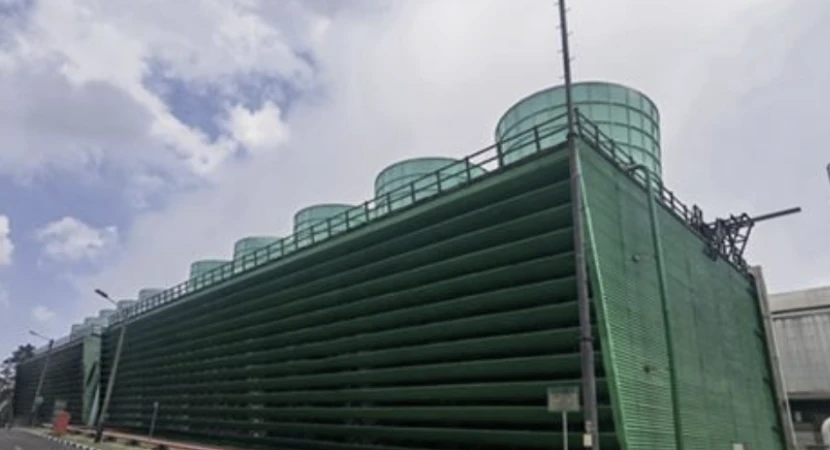
LATINO's FRP-structure industrial cooling towers use pultruded fiberglass sections that meet CTI standards and ASTM E84 flame-spread requirements, sitting on a concrete basin as an alternative to traditional poured-concrete towers - giving faster erection time and stronger corrosion resistance in chemical or coastal sites.

Field-Assembled for Large-Capacity Cells
Each induced-draft counterflow cell is rated 2,000,000–20,000,000 kcal/h with a water flow of 400–4,000 m³/h, which is why chemical plants, refineries, power stations and large HVAC systems favor open towers whenever raw process water does not need to stay isolated from air.
Closed Circuit Cooling Towers: Built for Clean, Protected Process Fluid
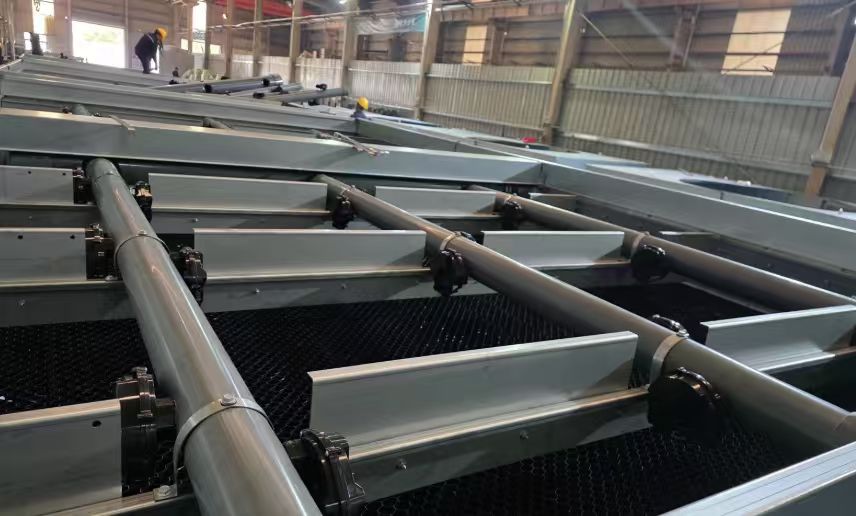
A closed circuit (closed-loop) cooling tower keeps two fluid circuits separate: the process fluid recirculates through sealed coil tubes, while spray water and air only ever touch the outside of the coil. The process fluid never contacts open air, dust or biological growth.
Counter-Flow Closed Cooling Tower
Air flows upward against downward spray water across the coil, maintaining a consistent temperature gradient. Compared with an open tower, this configuration eliminates scaling, corrosion and biological growth inside the process loop, cutting maintenance on downstream heat exchangers, molds and induction equipment.

Freeze Protection & Loop Simplicity
Because the process fluid never contacts air, glycol can be added directly to depress its freezing point - a real advantage for plants in Northern Europe, Russia or Canada. A closed tower also replaces the classic open-tower-plus-heat-exchanger arrangement with one sealed, self-contained unit, saving floor space and pump piping.
Open vs. Closed Circuit Cooling Tower: Side-by-Side Comparison
| Comparison Point | Open (Evaporative) Tower | Closed Circuit Tower |
| Fluid contact with air | Process water contacts air directly | No contact - fluid stays sealed in coil |
| Process fluid purity | Exposed to dust, scale, biological growth | Protected; less scaling and fouling risk |
| Typical upfront cost | Lower for the same heat rejection | Higher, but can undercut open tower + separate heat exchanger |
| Operating power | Lower fan/pump load for equivalent duty | Requires more power for the same cooling effect |
| Freeze protection | Needs added winterization measures | Glycol can be added to the closed loop |
| Footprint / equipment count | Tower only; heat exchanger added separately if isolation is needed | Single self-contained unit, more compact |
| Typical capacity (per cell) | 2,000,000–20,000,000 kcal/h, 400–4,000 m³/h water flow | Sized per coil bundle; scalable in series or parallel units |
| Best-fit industries | Power plant, large-scale HVAC, refineries, oil & gas | Induction/medium-frequency heat treatment, plastics/die-casting, chemical reactors, electroplating |
Source: LATINO product specification pages for Industrial Cooling Tower and Closed Cooling Tower.
5 Steps to Choose the Right Cooling Tower for Your Plant
- Confirm whether the process fluid can touch open air. If it must stay contaminant-free (e.g. induction heating loops, electroplating baths, plastic mold cooling), a closed circuit tower is the safer starting point.
- Calculate heat rejection load in kcal/h. For loads inside the 2,000,000–20,000,000 kcal/h per-cell range, an FRP open tower is typically the more cost-efficient build.
- Check winter ambient temperatures at the install site. Sites that regularly drop near or below freezing benefit from a closed loop with glycol, avoiding open-tower winterization procedures.
- Compare total footprint, not just the tower price. If an open tower needs a dedicated plate heat exchanger to protect the process loop, add that equipment's cost and space before comparing it to a closed tower quote.
- Request field-assembly vs. factory-assembly options. Larger cells are usually field-erected on site; confirm your supplier's installation team and lead time before finalizing capacity.
Why Source Your Cooling Tower from Tianjin LATINO
|
20+ Years Production Experience In-house FRP cooling tower manufacturing plus a dedicated field-erection and installation team, based in Sino-Singapore Tianjin Eco-city. |
Business Across 64 Countries and Regions Including the UK, Germany, Poland, Turkey, UAE, Malaysia, Indonesia, Japan, Australia, India and Singapore. |
One-Stop Engineering Service Scheme design, inspection & testing, construction/demolition and ongoing maintenance and repair - not just equipment supply. |
LATINO's cooling towers and components serve the petrochemical, petroleum, power, metallurgy, medicine and rubber industries. See real installation photos in our Case section, or explore Cooling Tower Parts (fill, drift eliminators, fan stacks, gearboxes) if you only need replacement components.
Frequently Asked Questions
Can a closed circuit cooling tower fully replace an open tower plus a separate heat exchanger?
-
In most cases yes. A closed circuit tower combines both functions into one sealed unit, which cuts pump piping, floor space and the cleaning labor typically needed on a plate heat exchanger that traps solids from an open loop.
What capacity range does LATINO's FRP open cooling tower cover per cell?
-
Each induced-draft counterflow cell is rated 2,000,000–20,000,000 kcal/h with a water flow of 400–4,000 cubic meters per hour, suited to chemical plants, refineries, power stations and large-scale HVAC systems.
Which industries typically need a closed circuit cooling tower instead of an open one?
-
Induction and medium-frequency heat treatment, quenching and electroplating solutions, large mold cooling for die-casting and injection molding, plus motors, diesel engines and continuous casting equipment - anywhere the process fluid must not be exposed to open air.
Is FRP structure better than a traditional concrete cooling tower?
-
FRP structures use pultruded fiberglass sections certified to CTI standards and ASTM E84 flame-spread requirements, still installed over a concrete basin. Compared with fully poured-concrete towers, FRP construction is faster to erect and more resistant to corrosive environments.
Can LATINO provide field-erection for large-capacity cooling towers?
-
Yes. Larger cells that are difficult to ship pre-assembled are erected on site by LATINO's own installation team, in addition to factory-assembled options for smaller towers.
Not sure whether an open or closed tower fits your load?
Send us your heat rejection duty (kcal/h or tons) and site conditions - our engineers will recommend a tower type and configuration free of charge.
Request a Quote WhatsApp Our Team


